
How to Master Preventive Maintenance Strategies: From Planning to Perfect Execution

Key Takeaways
• Preventive maintenance delivers 150% ROI over five years while reducing downtime by 70% and extending equipment life by 20-40% compared to reactive approaches.
• Follow the 5-step implementation process: Identify critical assets, create detailed checklists, schedule tasks systematically, automate with CMMS software, and monitor performance continuously.
• Leverage smart technologies for maximum impact: Combine IoT sensors for real-time monitoring, AI analytics for predictive insights, and mobile tools for seamless execution.
• Track three critical metrics for success: MTBF (reliability), MTTR (repair efficiency), and OEE (overall effectiveness) to measure performance and guide improvements.
• Evolve toward integrated maintenance systems that combine preventive scheduling with predictive analytics for optimal equipment uptime and cost efficiency.
Many maintenance professionals face this harsh reality. Running equipment to failure costs ten times more than effective preventive maintenance strategies. Smart companies are moving faster toward better ways to care for their equipment.
Modern maintenance uses IoT sensors and artificial intelligence to predict equipment failures before they happen. This reduces unplanned downtime by a lot. Many facilities still can't implement these strategies well and miss out on key benefits like lower maintenance costs and better production output.
The data proves it: Total Preventive Maintenance (TPM) boosts business performance and leads to higher Overall Equipment Effectiveness (OEE) scores. A complete preventive maintenance system turns reactive firefighting into proactive reliability.
Let me walk you through everything about preventive and predictive maintenance strategies—from the original planning to perfect execution. You'll find practical steps to build a total maintenance system that keeps your equipment running smoothly, extends asset lifespans, and protects your bottom line.
Understanding Preventive Maintenance Strategies
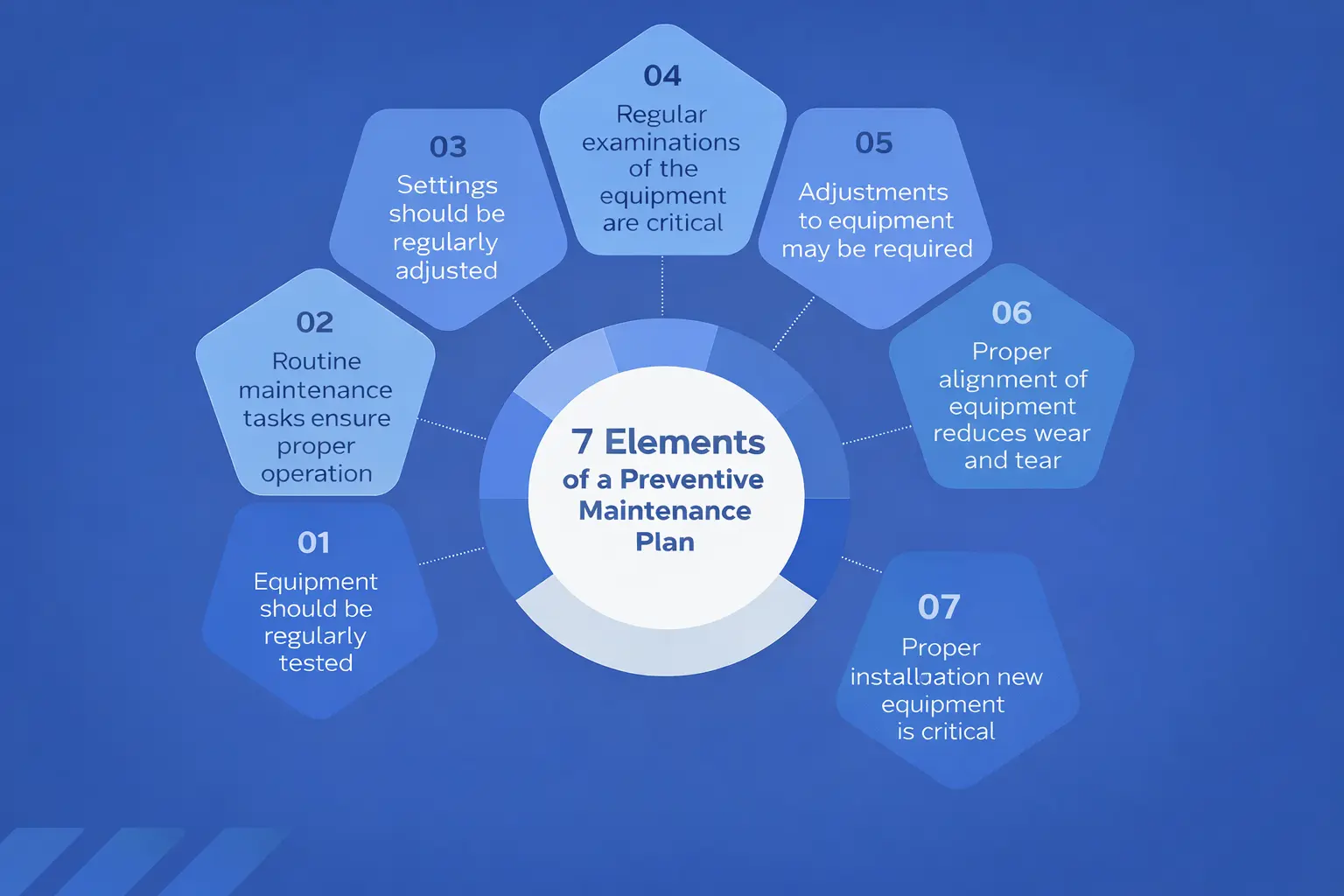
Reliable asset management starts with preventive maintenance. This strategy moves away from reactive approaches and focuses on scheduled interventions. The equipment runs smoothly and unexpected breakdowns become rare.
What is preventive maintenance?
Preventive maintenance (PM) covers regular, scheduled tasks that maintain assets before failures happen. Teams clean and lubricate equipment, replace worn parts, and repair critical components based on set schedules. This proactive approach keeps operations running smoothly.
Two main categories define most preventive maintenance strategies:
- Time-based maintenance: Tasks happen at specific calendar intervals whatever the equipment condition
- Usage-based maintenance: Operational metrics like runtime hours, production cycles, or mileage trigger maintenance
A Computerized Maintenance Management System (CMMS) helps organizations automate work orders and simplify scheduling. This system creates strong foundations for effective preventive maintenance.\
Preventive vs corrective vs predictive maintenance
The right maintenance strategy depends on understanding how different approaches work:
Timing sets these approaches apart. Corrective maintenance follows a "run-to-failure" policy. Preventive maintenance spots problems early. Predictive maintenance uses data analytics to pinpoint the perfect time for maintenance.
Why preventive maintenance matters for modern operations
Preventive maintenance makes a strong business case. Organizations that implement PM strategies see remarkable results:
- Reduced downtime: Companies using preventive approaches face 3.3x less downtime than those relying on reactive maintenance
- Extended asset life: Regular PM can boost equipment life by 20-40%
- Substantial cost savings: Planned preventive maintenance costs 2-5x less than reactive approaches
- Impressive ROI: PM investments yield 150% annual return over five years
PM also cuts non-compliance risks by 66% through regular inspections and maintenance. Modern operations managing complex equipment networks need a total maintenance system. Preventive strategies build lasting operational resilience.
Core Technologies That Power Smart Maintenance
Modern facilities are moving faster toward analytical maintenance approaches that advanced technologies power. Digital tools are the foundations of preventive maintenance strategies that extend equipment life and help avoid getting pricey breakdowns.
Role of CMMS in preventive maintenance system
Computerized Maintenance Management Systems (CMMS) work as the central hub for all maintenance activities. This software makes operations smoother by automating work orders, tracking maintenance history, and generating detailed reports.
A resilient CMMS gives your team the tools to:
- Schedule maintenance based on time intervals or usage metrics
- Manage spare parts inventory to ensure availability when needed
- Track asset performance and spot recurring issues
- Generate complete maintenance documentation
CMMS platforms help teams move from reactive to proactive maintenance and improve operational efficiency by centralizing maintenance data. These systems also blend with other enterprise platforms to boost financial tracking and resource allocation.
How IoT sensors enable condition-based monitoring
Internet of Things (IoT) sensors change traditional preventive maintenance into condition-based maintenance by monitoring critical equipment parameters. These devices measure vibration, temperature, pressure, and other operational metrics live.
IoT sensors connected to your maintenance system warn early about potential failures. Your maintenance teams can step in before breakdowns happen. This approach bases maintenance scheduling on actual equipment condition instead of fixed intervals. It eliminates unnecessary maintenance while preventing unexpected failures.
Teams that use IoT-based monitoring see extended equipment uptime. Sensor data flows directly into CMMS platforms to trigger work orders automatically when they detect abnormal conditions.
Using AI and analytics for predictive insights
AI takes preventive maintenance further by analyzing massive data sets to find patterns before equipment fails. AI algorithms get into historical performance and live sensor data to create predictive models that forecast maintenance needs.
These systems learn from operational data and become more accurate over time. Machine learning models can spot subtle anomalies that humans might miss, which offers unmatched visibility into equipment health.
Mobile tools for real-time maintenance execution
Mobile apps connect maintenance teams with critical information whatever their location. Technicians can view their tasks, document completed work, and access maintenance records right from their smartphones or tablets.
Mobile CMMS apps offer many more benefits. They cut down data entry time and give immediate access to equipment documentation. Teams can complete procedures on the move. Technicians take photos of issues, upload files, and track work time from any maintenance location.
Get Demo of a complete maintenance system to see how these technologies work together for a total maintenance solution that maximizes equipment reliability.
Steps to Build and Execute a Preventive Maintenance
A good preventive maintenance plan needs both smart planning and hands-on execution. These five steps will help you create a detailed strategy that keeps your equipment running longer with less downtime.
Step 1: Identify critical assets and failure points
Start with a detailed inventory of all your facility's machinery and equipment. Each asset needs documentation of its current condition, maintenance history, and how often it's used. Your next task is analyzing which assets matter most based on:
- Safety and operational effects
- Repair expenses and downtime risks
- Work to be done for upkeep
- Compliance requirements
This ranking helps you focus maintenance resources on equipment that could seriously disrupt operations if it fails.
Step 2: Create a preventive maintenance checklist
Your standardized checklists should spell out specific tasks for each piece of equipment. A good checklist will:
- Give step-by-step instructions
- Show helpful visuals and diagrams
- Put safety first and last
- Tell you what tools and parts you need
Clear, detailed checklists help your maintenance team stay consistent. They give enough information for new technicians to do the job right.
Step 3: Schedule tasks and assign responsibilities
Set up maintenance schedules based on what manufacturers recommend, how you use the equipment, and past performance data. You might want to use:
- Time-based schedules for equipment you rarely use
- Usage triggers for heavily used assets
- Condition monitoring where it makes sense
Make it clear who does what, what they need to do it, and when it needs to be done.
Step 4: Automate with preventive maintenance software
A Computerized Maintenance Management System (CMMS) will digitize your preventive maintenance program. This software lets you:
- Set up automatic maintenance schedules
- Create and follow work orders
- Keep maintenance records
- Track spare parts
Teams using automation complete up to 70% more preventive maintenance tasks year over year. You won't need to rely on checking calendars anymore.
Step 5: Monitor performance and adjust as needed
Keep an eye on how well your preventive maintenance program works by tracking:
- Planned work ratio
- PM compliance percentage
- Mean Time Between Failures (MTBF)
- Cost per unit maintenance
These numbers help you fine-tune your maintenance schedules, task scopes, and resource planning.
Ready to see how these steps work together? Get Demo of a solution that makes implementation easier across your operation.
Measuring Success and Scaling Your Strategy
Measuring what matters makes maintenance strategies work. Studies reveal maintenance costs make up 15-60% of total operating expenses. This makes tracking performance crucial to run operations well.
Key metrics: MTBF, MTTR, and OEE
Three vital metrics serve as the life-blood of maintenance performance evaluation:
The best OEE scores reach around 85%, giving a complete view of equipment productivity. Maintenance teams can spot performance gaps, guide improvements, and make smart investment choices in equipment and technology by tracking these indicators.
Using dashboards and reports to track progress
Interactive dashboards turn raw maintenance data into applicable information. These tools display up-to-the-minute information in visual, customizable formats, unlike static reports. A good maintenance dashboard helps you:
- See asset health indicators quickly
- Spot potential maintenance process bottlenecks
- Make data-backed decisions about resources
- See work order completion rates and technician productivity
CMMS reporting tools generate scheduled reports automatically, which removes manual data entry. Dashboards help line up department maintenance goals with company priorities through accessible KPI tracking.
Moving toward a total maintenance system
Your maintenance approach should scale up once preventive tasks show consistent results. A decreasing MTBF over time shows your preventive strategy works, and you're ready to expand.
The progress typically moves from simple scheduled maintenance to a complete system that brings together preventive and predictive elements. This change happens naturally as you gather more data and build richer asset histories.
Integrating preventive and predictive maintenance strategies
The best maintenance combines preventive scheduling with data-backed predictive insights. This balanced method brings several benefits:
- Less downtime by anticipating possible failures
- Better plant performance through early warning detection
- Maximum cost savings by cutting unnecessary maintenance
- Greater team confidence in maintenance decisions
Preventive maintenance builds the foundation while predictive techniques refine interventions to streamline processes. This integrated approach delivers lasting results across operations through steady measurement and systematic improvement.
Conclusion
Preventive maintenance marks a vital change from reactive firefighting to proactive asset management. Our analysis shows that structured PM strategies can reduce downtime by up to 70% and extend equipment lifespan by 20-40%.
Without doubt, the financial benefits build a compelling case. Preventive approaches typically cost 2-5 times less than reactive maintenance and offer an impressive 150% ROI over five years. These strategies also substantially reduce compliance risks through systematic inspections and timely interventions.
Success in maintenance starts with identifying critical assets and creating detailed checklists. A foundation for operational reliability emerges when you establish clear schedules, automate workflows with CMMS software, and measure performance continuously.
Modern technologies boost these efforts even further. IoT sensors provide immediate monitoring while AI analytics turn raw data into useful insights. These technologies work with mobile tools to create an uninterrupted maintenance ecosystem that prevents failures before they get pricey.
Note that true success depends on tracking the right metrics. MTBF, MTTR, and OEE give you the visibility to improve your maintenance program continuously and justify further investments in reliability.
Your preventive maintenance program will naturally progress toward a total maintenance system that combines both preventive and predictive elements as it matures. This comprehensive approach delivers maximum uptime while optimizing maintenance costs.
Many successful organizations have partnered with solutions like OPMaint to optimize this development. They create maintenance programs that protect assets, increase efficiency, and strengthen the bottom line. The strategies outlined in this piece can help you transform your maintenance operation from a cost center into a true competitive advantage.
.webp)

.jpeg)